Monitoring Water Hammer with the ESI GS4600 in Sewage Mains
Water hammering can create pressure spikes three to five times higher than typical operational pressure within a wastewater rising main. This can put immense stress on the system, eventually leading to failures and environmental catastrophe for local councils.
In this article, we explore how high-speed pressure transducers, like the ESI GS4600, can support nitrogen bladder tanks in preventing damaging water hammer events in wastewater rising mains.
Stuck for time? Contact the ADM team here or call directly on 1300 236 467.
What Causes Water Hammering in Rising Mains?
When a pump shuts down unexpectedly, waste effluent moving up the rising main reverses and flows back toward the closed non-return check valve. As the fluid hits the closed valve, it acts like a drum. At the same time, a low-pressure column forms and pushes back into the pipe, creating a shockwave that travels through the system. This shockwave, known as water hammer, turns kinetic energy into hydraulic pressure and keeps transferring energy through the pipes until it settles. This transient pressure spike puts immense stress on the system, impacting flanges, pipes, and sensors.
Preventing Water Hammering with Bladder Tanks
Today, many wet well valve pits use bladder tanks or fast-acting air-release vacuum valves. A bladder tank sits close to the non-return check valve, with an open neck to the waste media flowing through the rising main. When a pump shuts down and a low-pressure column forms, it pushes into the bladder tank, transferring kinetic energy into the tank's nitrogen atmosphere and creating a surge cushion.
Because the nitrogen cushion absorbs most of the force, the flanges and pipes around it experience less stress, preventing unnecessary fatigue and stress.
High-Speed Pressure Transducers - The ESI GS4600
This system has two monitoring requirements: first, monitoring nitrogen levels in the bladder vessel, and second, using a high-speed pressure transducer to detect incoming water hammering.
Image
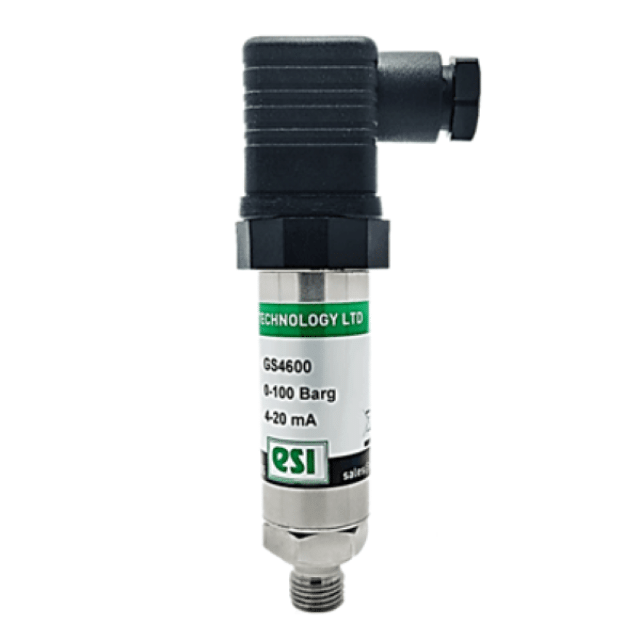
To address both of these needs, a high-speed pressure transducer with wetted parts suitable for nitrogen, water, and the corrosive nature of bio-waste matter is ideal, for this type of application. Within our ADM range, the ESI GS4600 is designed for these applications and offers overpressure capabilities rated for four times its set range. The ESI GS4600 has a 1-millisecond response time, making it ideal for monitoring incoming water hammer.
The ESI GS4600 series features a resilient 316 stainless steel build, featuring a piezoresistive silicon sensor diaphragm. This range is designed to cater to pressure needs across a range of applications, with options from 0-1bar up to 0-100bar. This range features a standard 4-20mA output and an IP65-rated mating socket with PG9 cable entry. This range of pressure transducer has an operating media temperature range of -20°C to +85°C. Learn more about the ESI GS4600 series here.
Unlike other waste-transit components, such as the wet-well collection tank or valve pit, where hydrostatic and flush-mounted pressure transducers contact the media, the ESI GS4600 pressure transducer lives within the nitrogen bladder vessel itself. Although the bladder vessel has an open connection to the rising main pipeline, the pressure differential between the bladder vessel and the waste-laden media keeps the pressure transducer away from waste media and FOGs.
The ESI GS4600 high-speed pressure transducers support waste management infrastructure by continuously and accurately monitoring nitrogen levels in bladder vessels while quickly and reliably documenting water hammer events. This monitoring supports predictive maintenance of the pipe circuitry and non-return valves, ensuring intervention before catastrophic failures.
Learn more about the ESI range of pressure transducers here.
Need Help? Call Today!
Do you have a wastewater application requiring flush-mounted, hydrostatic, or high-speed pressure transducers? Our ADM team are here to help! If you have any questions, contact the ADM team through our contact page or call us directly on 1300 236 467.
Image