Pressure Transducers for Sub-Zero HVAC and Refrigeration Systems - TSA-1202PT Pressure Transducer
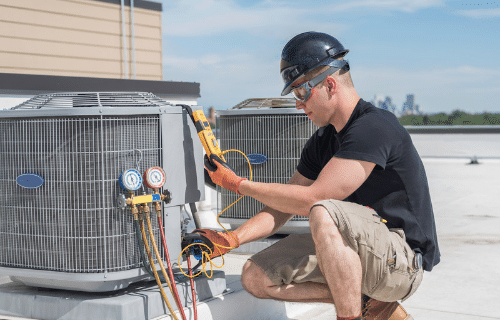
Pressure transducers in commercial chillers, cold-storage facilities, and supermarket refrigeration racks face tough conditions that quickly wear out standard sensors. High-side compressor lines need sensors with high burst ratings. Still, low-side suction lines and sub-zero brine loops are even more challenging because of constant temperature changes, condensation, and ice buildup inside the equipment.
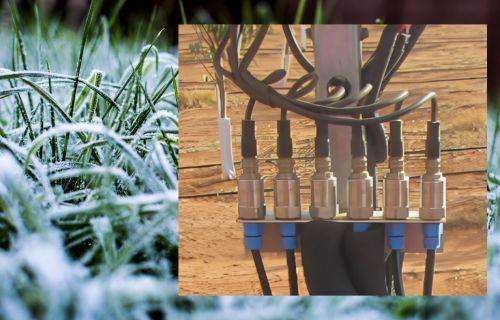
When attached to a suction line running between -20°C and -40°C, a transducer becomes a cold spot. Moisture in the air moves toward this surface, which can lead to measurement errors, short circuits, and even cracked diaphragms. In this article, we explore reasons for pressure transducers failing in colder HVAC applications, and how the TSA-1202PT can support HVAC applications with freeze-resistant capabilities.
Stuck for time? Contact the ADM team here or call directly on 1300 236 467.
Why Standard Transducers Fail in Cold Service
Standard industrial sensors rely on internal air cavities and elastomeric O-rings. When deployed on low-temperature lines, they succumb to three physical failure modes:
- Capillary Condensation Ingress: Warm, humid air from the plant room can get inside standard connectors or housing seams. When this vapour cools down inside the sensor, it turns into liquid water on the circuit board and ASIC. This can cause calibration to drift and may lead to short circuits.
- Destructive Ice Expansion: When water freezes, it expands by about 9%. During defrost cycles, melted frost can collect moisture inside sensor cavities, threads, or unused spaces. As the system cools down again, this water freezes and puts strong pressure on the sensor, which can break wire bonds or crack delicate ceramic and silicon chips.
- Elastomer Embrittlement: Hot-gas defrost cycles can quickly change temperatures from -30°C to +40°C. Standard O-rings, such as nitrile, can harden and lose flexibility. This lets compressor oil and refrigerant leak past the seal.
Freeze-Resistant Pressure Transducer - TSA-1202PT
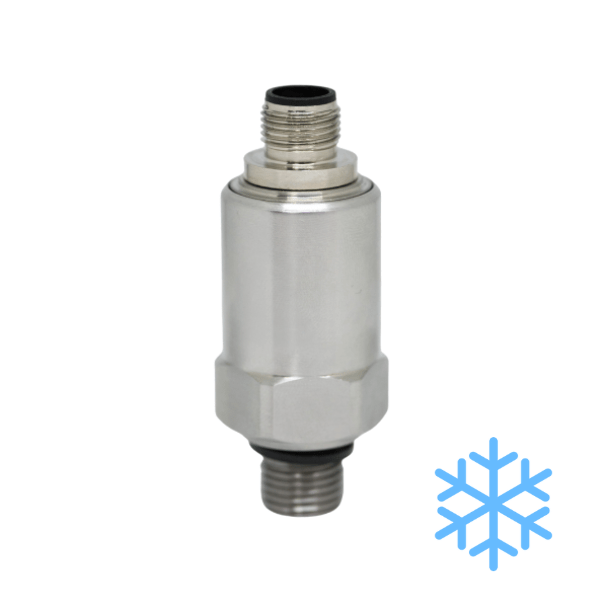
The TSA-12The TSA-1202PT pressure transducer is made for sub-zero HVAC and outdoor use. It offers a cost-effective option with a ceramic piezoresistive sensing element and a wafer spring that protects the sensor, letting ice form and expand without causing damage.
The TSA-1202PT features a broader operating temperature range of -35°C to 105°C and is constructed from 316 stainless steel with chloroprene rubber seals and an IP65 rating.
Image
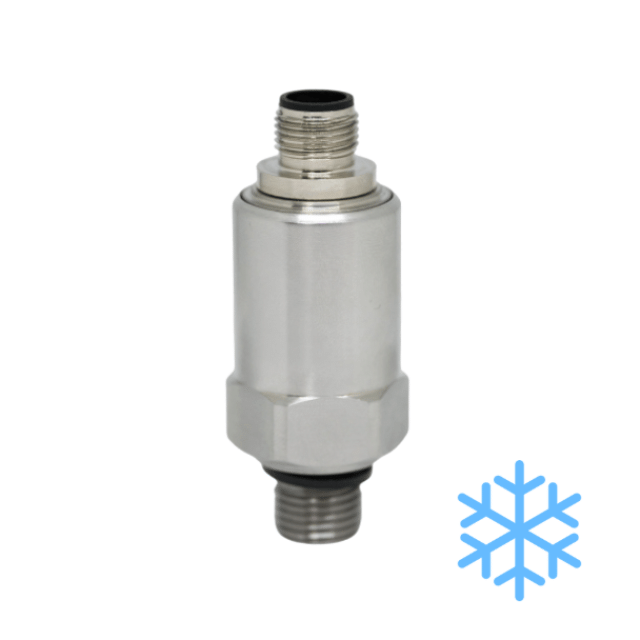
The range includes models that cater to lower-end pressure ranges from 0- 2 bar up to 0-50 bar. The TSA-1202PT features an overload pressure range of 1.5X and a burst pressure of 2X.
The TSA-1202PT is ideal for HVAC applications. The TSA-1202PT is a great choice for HVAC systems where freezing could be a problem. If you have any questions, contact the ADM team through our contact page or call us directly on 1300 236 467.
Image