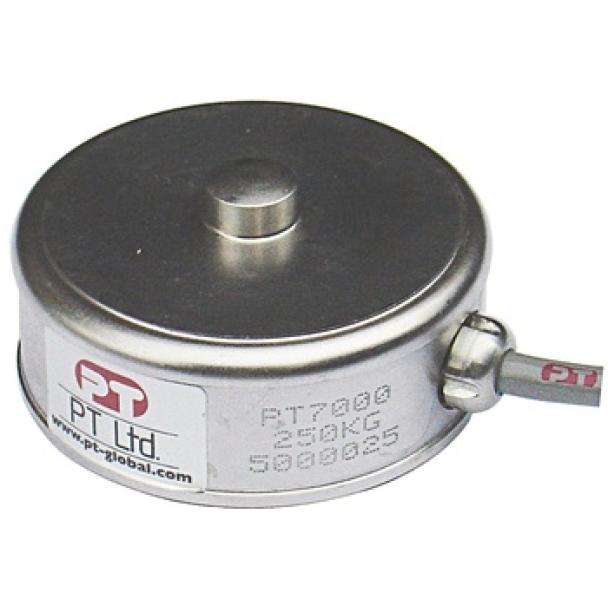
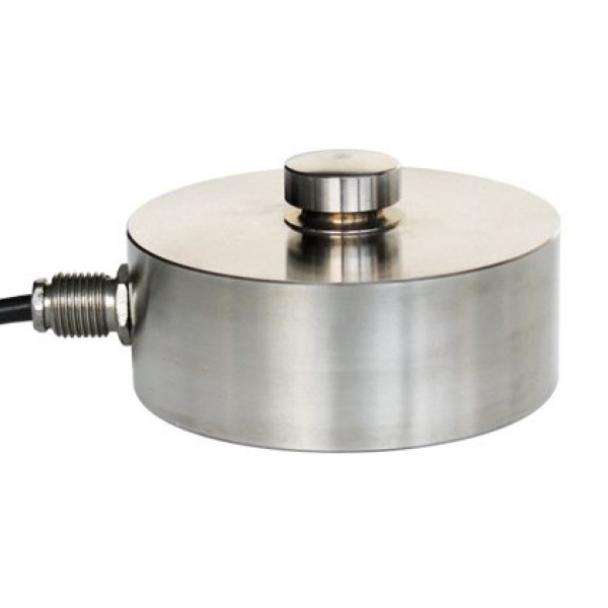
What type of Load Cell should I use?
ADM Instrument Engineering stocks a wide range of load cells and is on hand to offer you expert advice on what type of load cell is best suited to your application.
Need help finding the right load cell? Speak to our team on 1300 236 467 or send any questions through our contact page here.
So, what types of load cells are available, and what applications are the different types of load cells best suited to?
Basically, a load cell is a device that measures force. Some can measure a compression force, which is a force pushing down onto the device. Others can measure a tension force, which is a force pulling away from the device. Some load cells can measure both compression and tension forces.
In this article, we highlight the different types of load cells and the applications they can be used for.
Miniature Load Cells
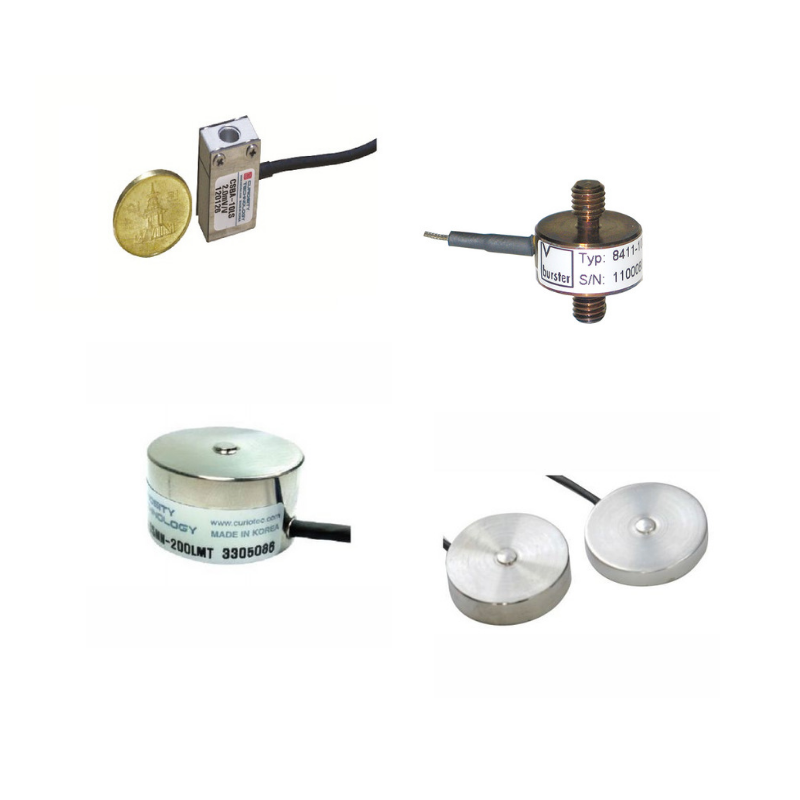
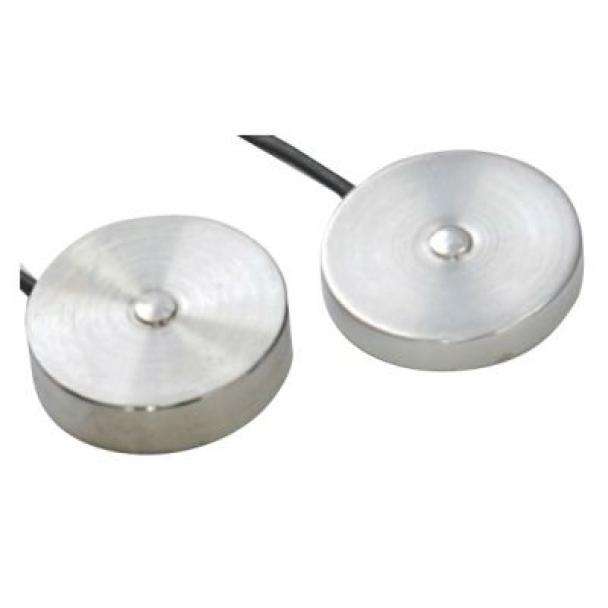
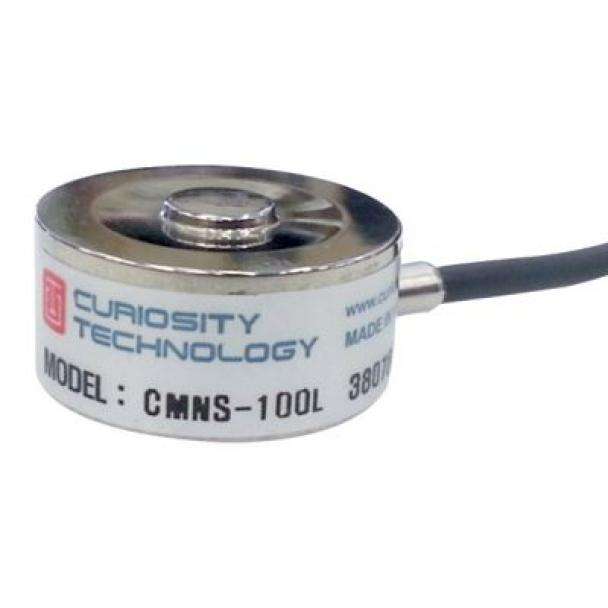
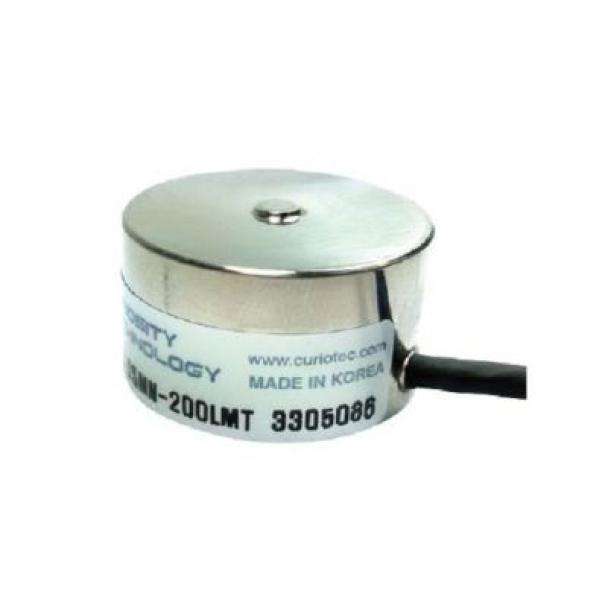
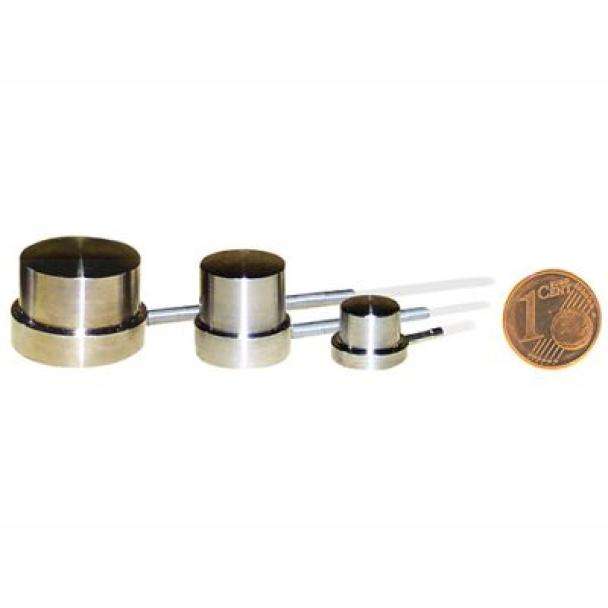
Miniature button load cells measure compression forces only. They are ideal for applications where space is very limited. The load cell is usually cemented into position because it is too small for any mounting hardware. Typically, measuring ranges are available up to a maximum of 500 kg. Possible applications include retrofitting load measurement in machinery that wasn't originally designed to take load cells.
Explore our Miniature Button Load Cell Range here.
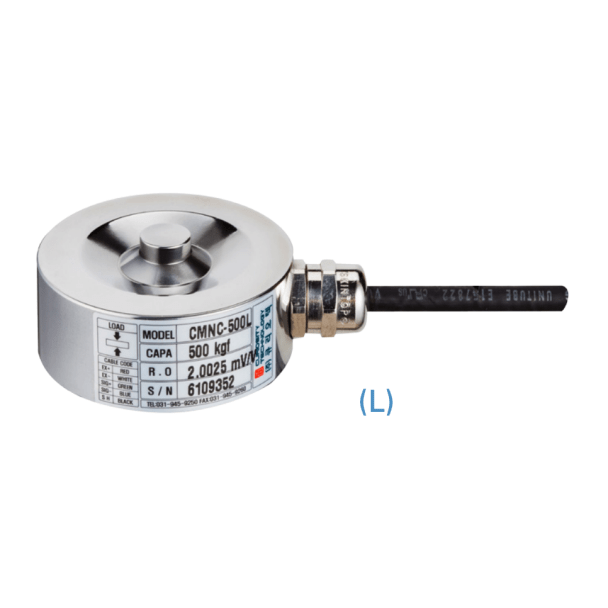
Compression (Button) Load Cells
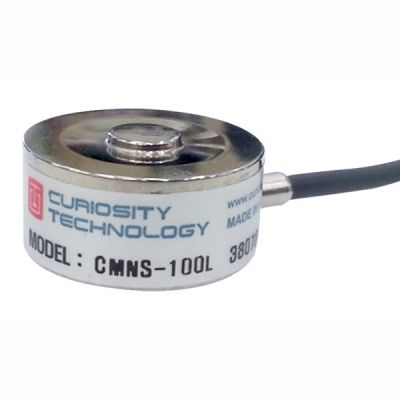
How Compression Button Load Cells work
Compression Button Load Cell Capabilities
Compression Button Load Cell Limitations
Compression Button Load Cell Applications:
- Automated Manufacturing & Assembly
- Press-Fit Verification:
- Automated Clamping & Fastening:
- Component Testing:
- Hydraulic & Pneumatic Systems
- Cylinder End-Force Monitoring
- Die & Mold Protection
- Medical & Laboratory Equipment
- Surgical Robots & Prosthetics
- Fluid Dispensing & Syringe Pumps
- Physical Therapy & Ergonomics Testing: Force Plates, Pinch Gauges, Grip-Strength Measuring Devices
- Automotive & Aerospace Testing
- Pedal & Control Force Measurement
- Crash Testing & Dummy Instrumentation
- Structural Load Distribution
- Process Weighing & Level Monitoring
- Restricted-Clearance Tank/Hopper Weighing
- Conveyor Belt Tensioning
Explore our Compression (Button) Load Cells here.
Bending Beam Load Cells
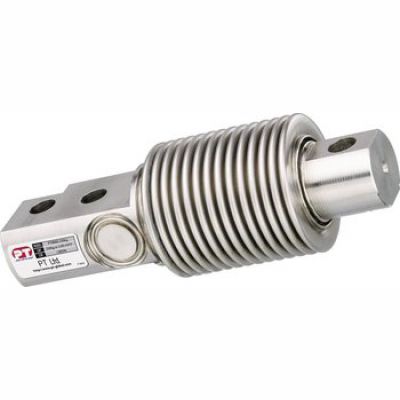
Bending beam type load cells are used in many applications because their compact beam shape makes them easy to fit. In application, bending beam load cells feature a fixed end (the side with mounting holes and the cable exit) and a live/loading end. Using ground spacing washers on the fixed end provides clearance for deflection under load, and the live/loading end can be bolted to load-introduction hardware such as rubber mounts, rocker pins, blind-hole loading pins or loaded buttons.
A common feature of bending beam load cells is the hermetically sealed stainless steel bellows, which makes them effectively water-resistant. For low-capacity applications, users may want to consider another load cell type, as bending beam load cells tend to have reduced accuracy at lower weight ranges.
Bending Beam Load Cell Applications
Bending Beam load cells can be found in a range of industrial weighing applications;
- Small-to-medium Tank, Hopper, and Silo Weighing;
- 3- to 4-point mounting kits under low-capacity vessels to monitor batching, inventory and level-by-weight installations.
- Packaging and Filling Machinery;
- Checkweighers, bag fillers, automated dosing machines.
- Conveyor and Belt Scales;
- Continuous inline weighing for food processing and pharmaceutical manufacturing.
- Platform and Bench Scales;
- Multi-cell low-profile scales for warehousing and parts inventory.
- Medical Equipment
- Patient lift systems, hospital beds with integrated scales and incubator weighing modules.
- Force and Web Tension Measurement:
- Material web tension monitoring (paper, film, foils) & basic insertion/press-force testing.
Bending Beam Load Cell Summary
Bending beam load cells feature high sensitivity, cost-effectiveness, and excellent linearity with repeatability in sub-500kg ranges. They are sensitive to off-axis loading and side forces compared to shear beams, and require mounting hardware when thermal expansion or structure deflection is present.
Explore our range of Bending Beam Load Cells here.
Tension / Compression Canister Load Cells
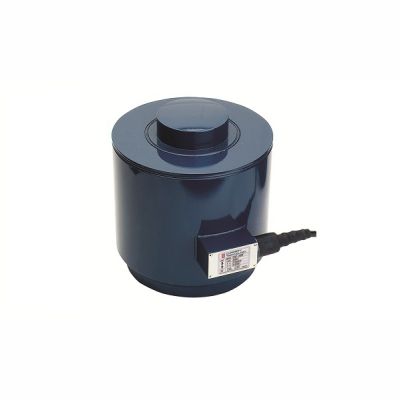
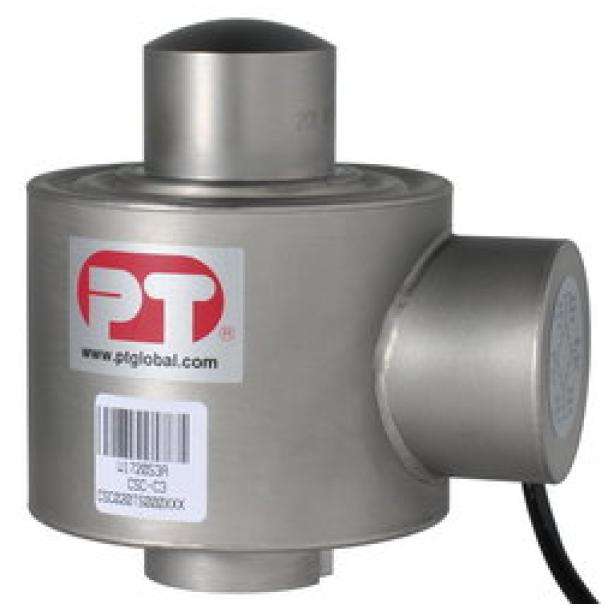
This is the type of load cell that is typically found on weigh bridges. They are available in a wide range of physical sizes, with a good choice of measuring ranges. A rocker column-type load cell can be used where load alignment will vary. Rocker column load cells have a unique dual radius loading surface. A large radius in the centre, where the load measurement is made, and a smaller radius at the outer extremities. This allows the load cell to rock, avoiding serious adverse loads caused by the weighbridge's differential expansion.
Explore our range of Tension/Compression Canister Load Cells here.
Shear Beam Load Cells
Shear beam load cells are cantilever-style force transducers that measure vertical loads by detecting internal shear stress instead of bending moments. There are two types of shear beam load cells:
- Single-Ended Shear Beam Load Cells
- One end is fixed, and the load is applied at the opposite end.
- Double-Ended Shear Beam Load Cells
- Both ends are fixed, and the load is applied at the centre.
How Shear Beam Load Cells Work
The beam is machined with recessed cavities, creating an I-beam web profile that concentrates principal shear stress. Strain gauges are bonded to the central vertical web at 45° angles to the neutral axis to measure principal tensile and compressive shear strains using a full Wheatstone bridge configuration.
Force is typically applied as a downward vertical compression onto the shear load beam cell; however, some designs allow measurement of both tension and compression. Since shear force remains uniform along the beam between the support and load points, the sensor output is less sensitive to minor variations in the load application point than in bending beams.
Explore our range of Shear Beam Load Cells here.
Shear Beam Load Cell Capabilities
Shear beam load cells are the primary standard for industrial process weighing and multi-cell platforms.
- Single-ended shear beam load cells typically measure forces from 250 kg to 10,000 kg.
- Double-ended shear beam load cells typically measure forces from 5,000 kg to 50,000 kg.
Deflection (drop & sag)
Shear Beam Load cells exhibit low deflection under full load, typically 0.2 mm to 0.5 mm (in some instances up to 1.0 mm). This range can indicate high mechanical rigidity and resistance to dynamic vibration.
Environmental Sealing
ADM’s range of shear beam load cells from Curiotec predominantly features nickel-plated steel or stainless steel. Curiotec’s range is typically IP66-rated; however, depending on the intended application, options from IP67 (potted) to IP68/IP69K (fully welded hermetic seal) are available for harsh chemical washdown environments.
Shear Load Cell Limitations
Torsion Sensitivity & Severe Lateral Loads
Shear beam load cells are typically more resistant to side forces and moment shifts than bending beams or compression button load cells. However, excessive side loads, torsion or significant angular misalignment can still distort the shear train field. To prevent this, use proper mounting assemblies, such as rocker pins, elastomer pads, or stay-rod restraints.
Limitations in Lower Capacities
The shear beam load cell's central web needed for shear stress measurement is difficult to manufacture for capacities below 100kg to 250kg. For micro to low measurement ranges, it's recommended to use bending beam or single-point load cells.
Firm Base Mounting - Torque Critical
Single-ended beams require high-tensile mounting bolts torqued to specific engineering values against a rigid base plate. If loose bolts or structural deflection at the fixed end occur, this can lead to false bending moments and zero drift.
This information can be found on Curiotec spec sheets, for example, “Tightening Torque - 29Nm”.
Typical Shear Beam Load Cell Applications
Platform & Floor Scales
- 4-Cell Industrial Floor Scales
- They are typically installed beneath each corner of heavy warehouse platform scales for pallet and bulk weighing applications.
- Low-Profile Pallet Jack Scales & U-Beams
- Integrated directly into mobile forklift tines and pallet beams.
- Livestock Scales
- Used in multi-point weighing platforms for cattle, livestock crates, and veterinary run-throughs.
Vessel, Tank & Silo Weighing
- Process Tank & Reactor Batching
- Installed within weigh modules under three-legged or four-legged blending tanks to measure inventory and automate ingredient batching.
- Hopper & Bin Weighing
- Mounted beneath feed hoppers and grain bins for loss-in-weight feeding systems.
- Silo Level Monitoring
- High-capacity double-ended shear beams are placed under bulk storage legs for inventory control.
Bulk Material Handling & Conveying
- Conveyor Belt Scales & Checkweighers
- They are used in in-line belt weighing stations to measure continuous mass flow rates of raw materials such as aggregates, mining ore, and grain.
- Screw Feeder Weighing
- They support entire dynamic feeder troughs to meter powders and bulk solids into production lines.
Heavy Vehicle & Transport Weighing
- Weighbridges & Truck Scales
- Double-ended shear beam load cells are mounted in central support modules under multi-axle vehicle weighbridges.
- On-Board Trucking Weighing
- They are installed directly between the vehicle chassis and the dump body or tipper to prevent highway overloading.
Industrial Testing & Tension Systems
- Overhead Cranes & Winch Overload Protection
- They are used with clevis pin or tension rod adapters to monitor wire rope tension and prevent hoist overloads.
- Structural Tension Rigs: Static proof-load testing for tie-down cables, rigging hardware, and anchor points.
Explore our range of Shear Beam Load Cells here.
Single Point Load Cells
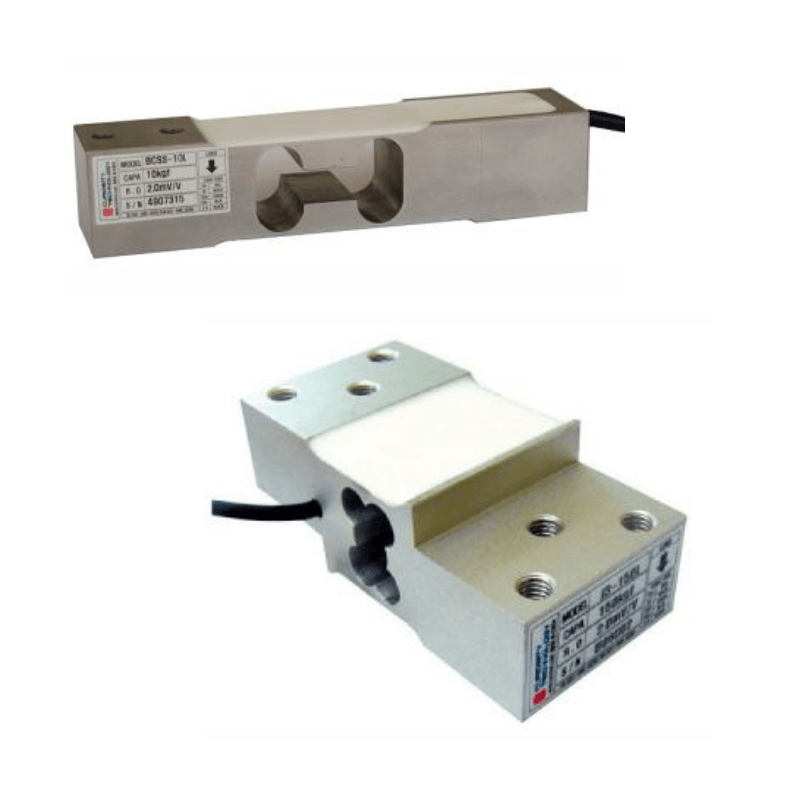
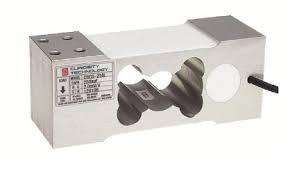
Single point load cells have an internal parallelogram structure that ensures the internal strain gauge only responds to force in one direction. If the load cell is levelled, it responds only to weight and is not affected by side forces. This makes them ideal for weighing applications where you can't control side forces. They are often used with a small scale base to measure lower force levels.
Explore our range of Single Point Load Cells here.
S-Beam Load Cells
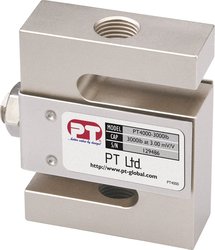
S-Beam type load cells are extremely versatile and measure either compression or tension forces. They are particularly good for weighing heavy objects that are cumbersome to handle. Lowering a bulky object onto a scale base risks overloading and damage if the load is dropped. Lifting the load with a tension S-Beam in line provides immediate, accurate weight measurement while minimising handling. This solution is also totally self-aligning and gives accurate results. S-Beams require a safety chain when used in crane applications to avoid the risk of an overload failure that could cause a dropped load.
Explore our range of S-Beam Load Cells here.
Contact Us
If you'd like to explore any of these types of load cells a bit further, speak with our helpful team of experts! Send any questions to our contact page here or call us directly on 1300 236 467.