ADM's Guide to Harting Industrial Connectors
In today’s industrial landscape, installations demand robust, flexible connectivity that can support various types of communications, whether it be power, signal, data or even pneumatics, all the while adhering to constrained spaces. This is largely where Harting products enter the discussion, with a wide ecosystem of connectors, housings, adaptors and modules to support various industrial installations. This guide provides a practical engineering framework for selecting, configuring and implementing Harting modular connectors within your next upcoming installation.
Within this guide, you will learn how modular architecture operates, how to match housing materials to harsh operational environments and how Industry 4.0 data interfaces reduce cabling footprints. Whether you are designing or procuring for harsh environments like mining, complex spaces such as robotics, food production safe for F&B production or robust for energy storage, we hope this guide simplifies interface specifications across your equipment lifecycle.
Key Takeaways
- Consolidate Multi-Media Lines: Harting Modular connectors can combine power, signal, data and pneumatics into a single pluggable connector housing.
- Reduced Connector Footprint: Adopting the Han Modular Domino cubes reduces connector size and weight by up to 50%.
- Environmental Resilience: Select housing engineered for high vibration, chemical washdowns, or EMI.
- Faster Panel Assembly: Implementing rear-mounting Han-Eco housings and Har-Port interfaces for faster off-site pre-wiring.
- Vibration Resilience: Deploying crimp or axial screw terminations to eliminate contact fatigue under heavy shock loads.
Understanding Harting Modular Connector Architecture
The Harting Han Modular series revolutionises industrial electrical installations, removing the need for hard-wired point-to-point connections or separate dedicated plugs, consolidating the various media channels of power, control, data and pneumatics into an easy-to-configure connection assembly.
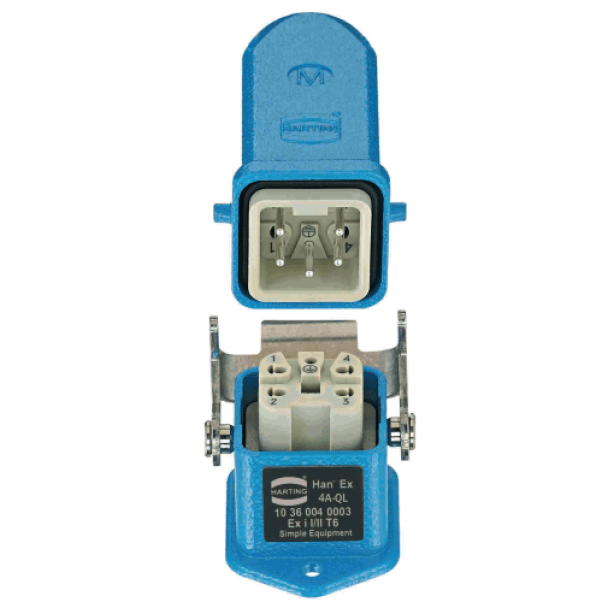
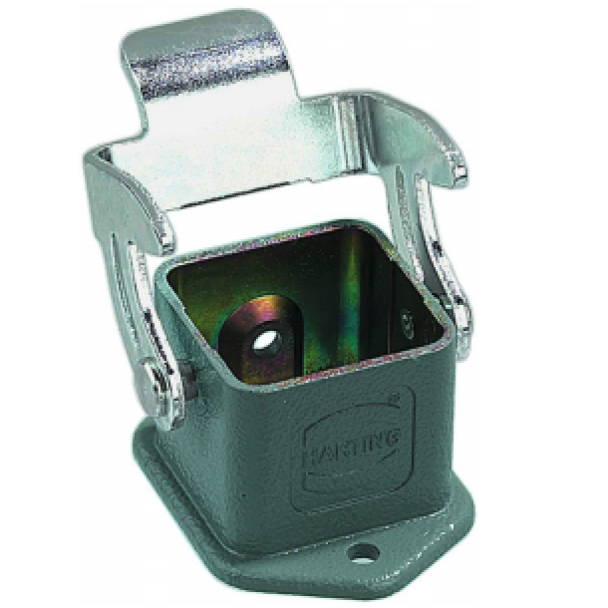
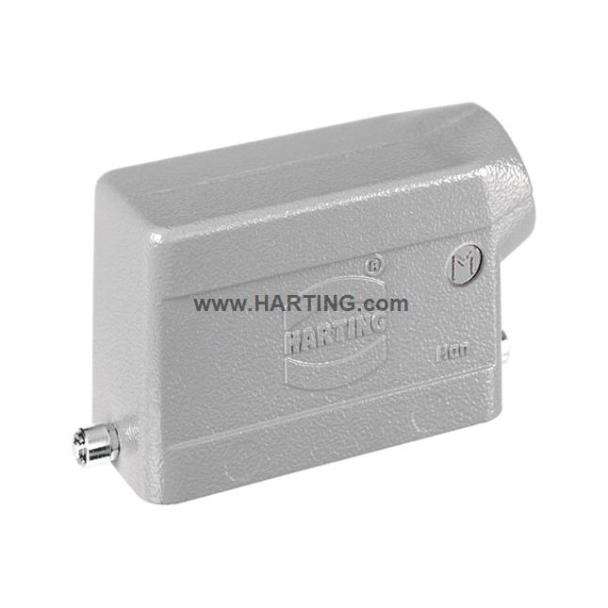
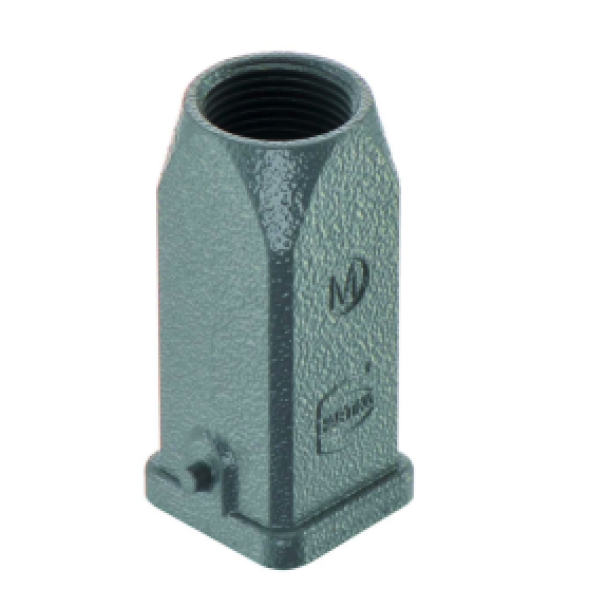
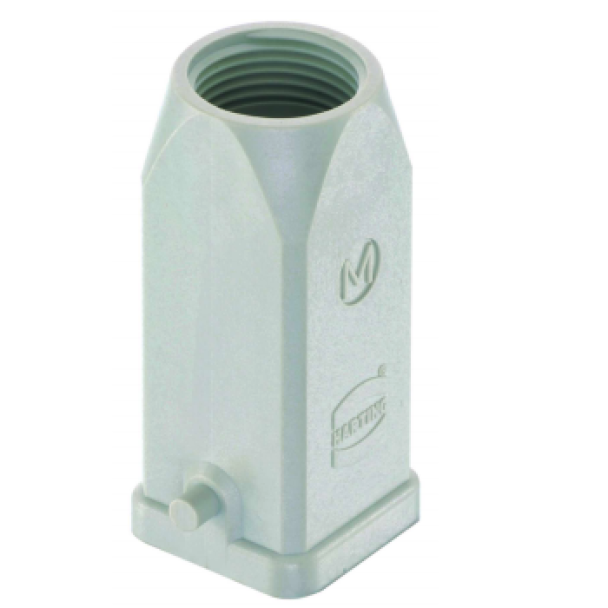
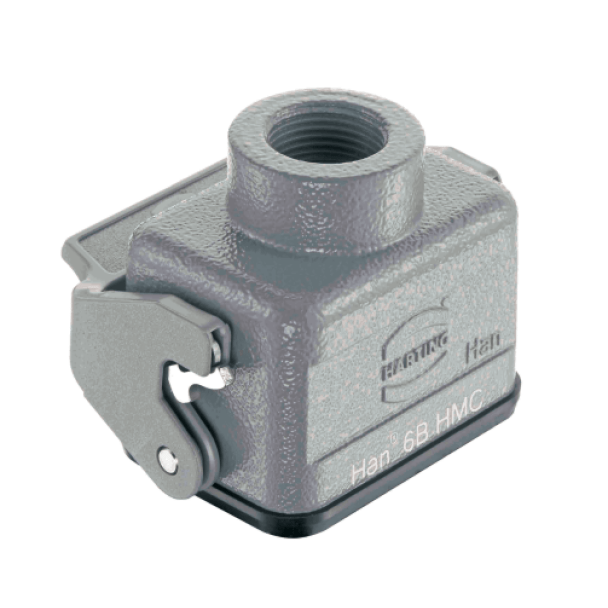
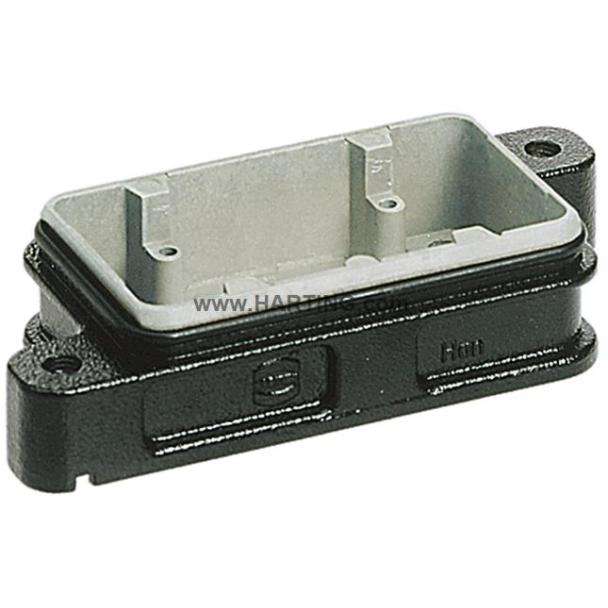
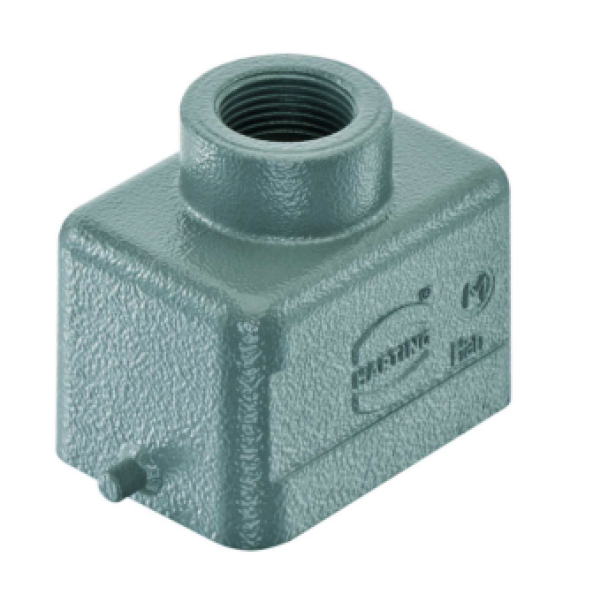
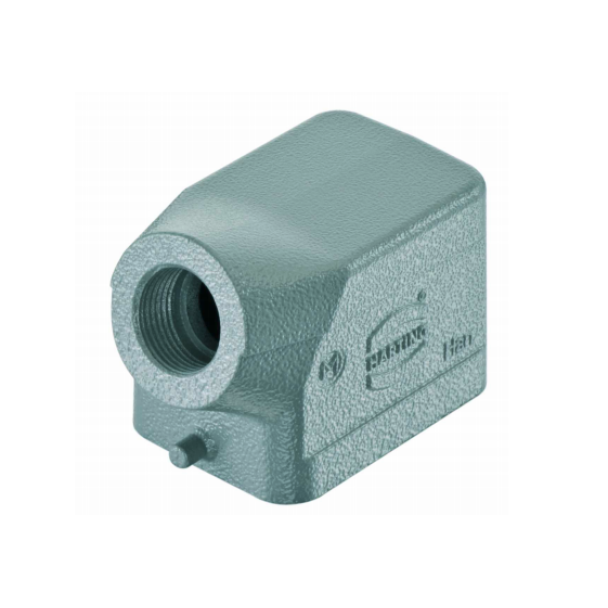
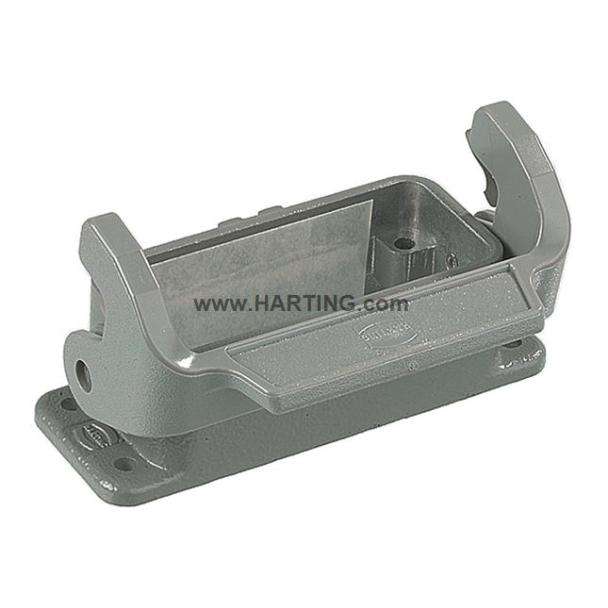
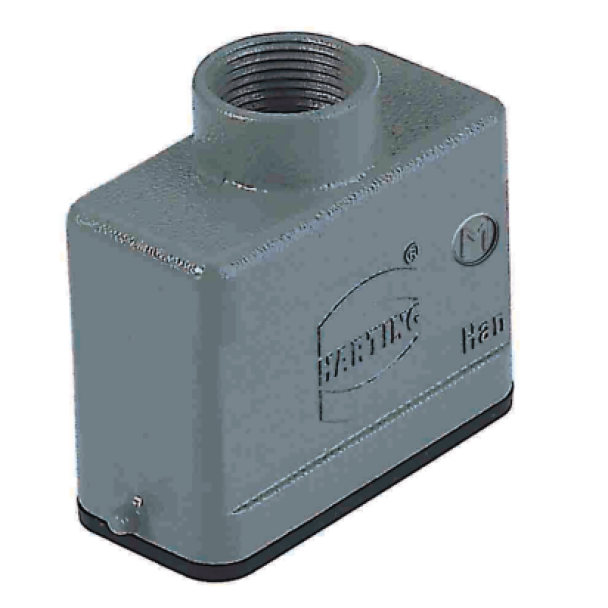
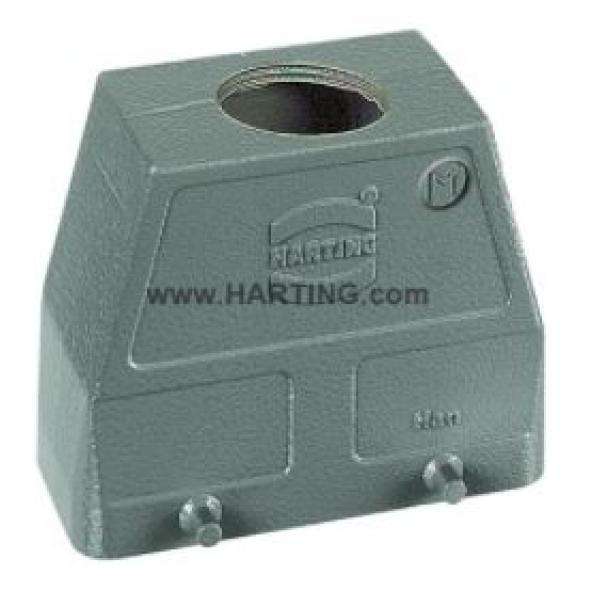
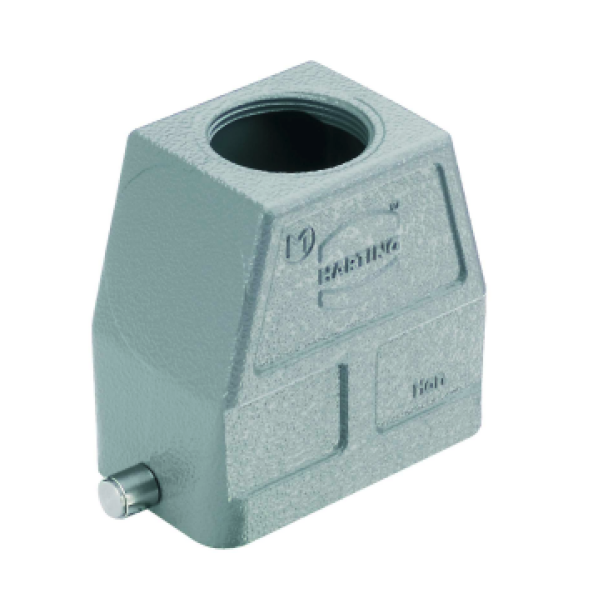
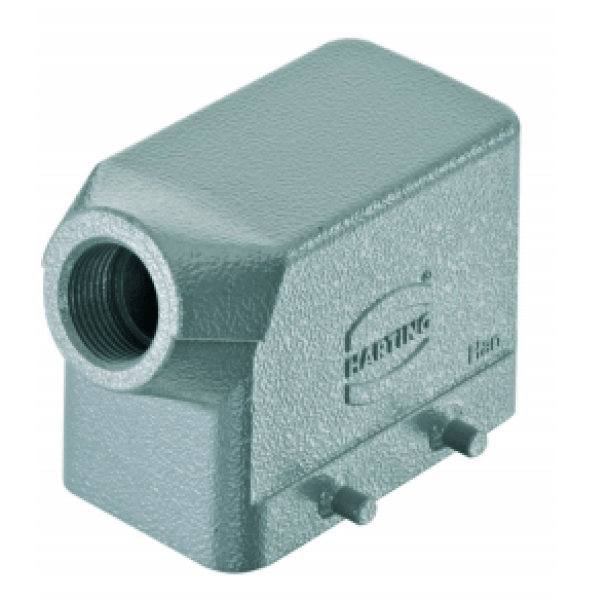
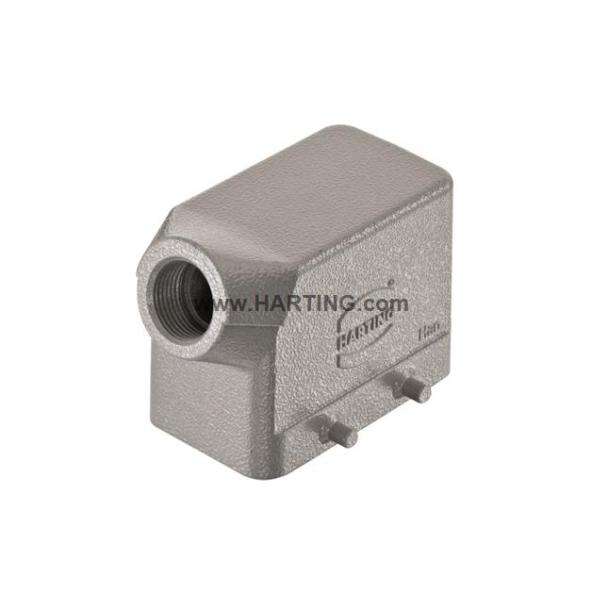
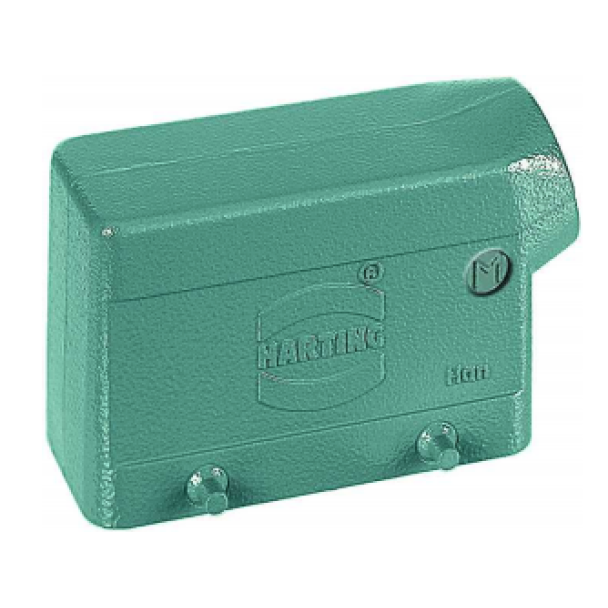
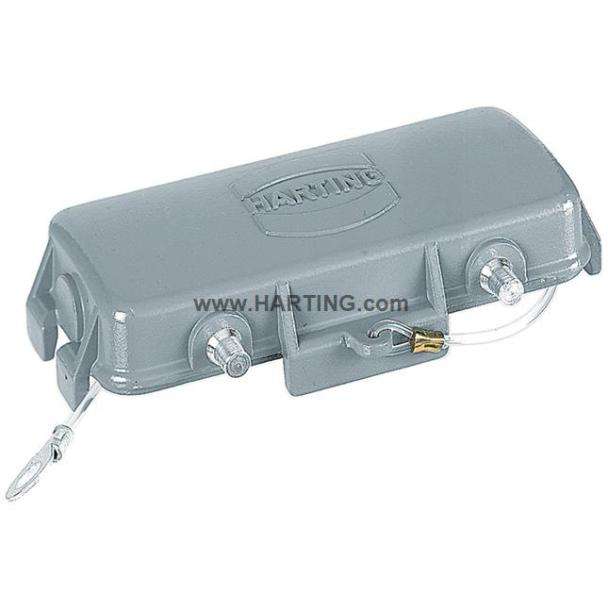
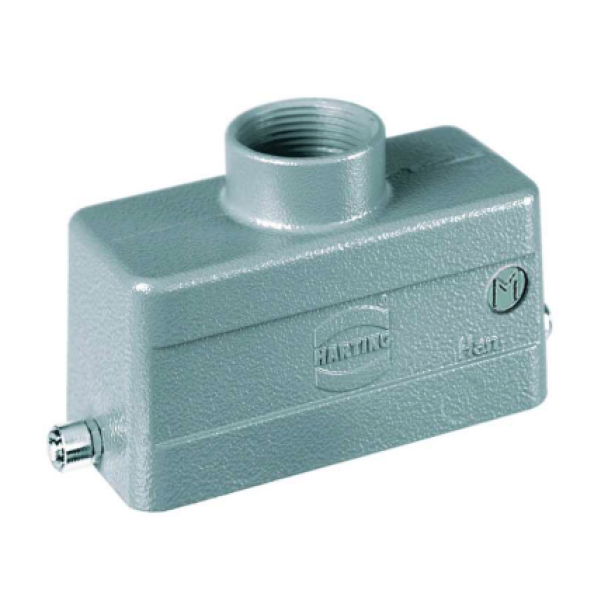
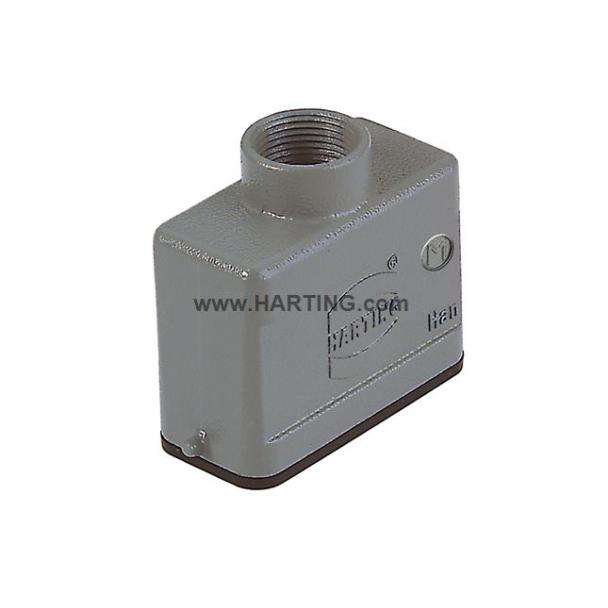
The complete modular assembly comprises a hood, a bulkhead or surface-mounted housing, male and female contacts, male and female inserts, cable glands, retaining frames, and protective covers. Standard hinged retaining frames—available in standard sizes such as 6B, 10B, 16B, and 24B—accommodate between 2 and 6 distinct modules within one interface.
This modularity allows design engineers to combine high-current power modules (up to 200 A), high-density control signal contacts, optical fibre, compressed air/pneumatic lines (up to 10 bar), and high-speed data connections such as Cat.6A RJ45, D-Sub, USB, and Coaxial into a single pluggable housing.
For applications requiring even tighter space envelopes, the Han Modular Domino system splits standard module slots into half-width "cubes". By installing two distinct cubes per module slot, system designers can reduce connector footprint and overall weight by up to 50% while maintaining full electrical compatibility across housings ranging from Han 6B up to Han L32B.
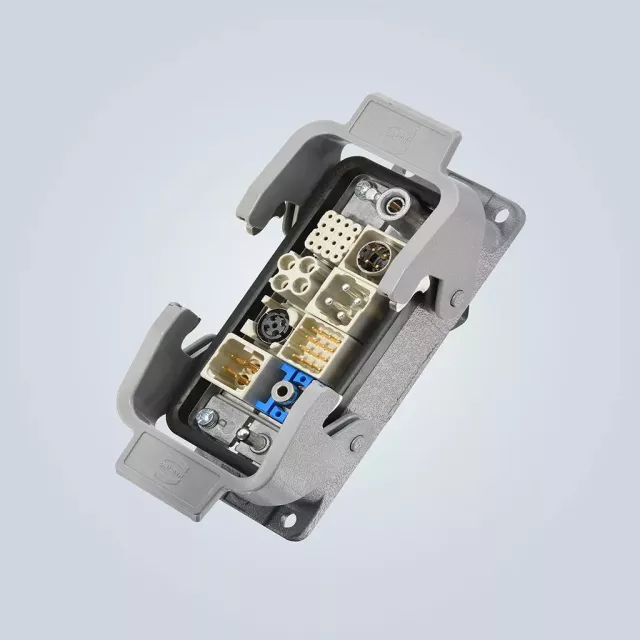
Furthermore, for standalone light-to-medium industrial equipment, the compact Han 1A series delivers up to 16 A of power, 12 signal contacts, or Cat.6 data in a halogen-free, IP65-rated plastic footprint.
| Modular System | Core Architecture | Key Capability / Limit | Target Benefit |
| Han-Modular | Hinged frames (6B to 24B) | 2 to 6 modules per frame; up to 200 A power | Consolidates power, signal, data, and air into 1 plug. |
| Han Domino | Half-width "cube" building blocks | 2 cubes per slot; 4 to 16 slots (8–32 cubes) | Cuts connector space and weight by up to 50%. |
| Han 1A | Ultra-compact plastic modular system | Max 16 A power, 12 signals, Cat.6 data; IP65 rated | Lightweight, halogen-free modularity for tight spaces. |
Read next:
Housing Material & Environmental Selection Guide
Han Eco Series
Han HPR Series
Han F+B Series
Han S Series
Han EMC Series
Housing Environment Checklist
- Indoor Standard Factory --------> Han B Die-Cast Aluminium
- Outdoor / UV / Lightweight -----> Han-Eco Glass-Fibre Polyamide
- Heavy Mining / High Vibration ---> Han HPR (IP68/IP69K, M6/M8 Screws)
- Food & Beverage Washdown -------> Han F+B (FDA Polypropylene, IP69K)
- Battery Energy Storage ---------> Han S (UL 4128, 200 A, Colour Coded)
- High EMI / Noise Protection ----> Han EMC (Nickel-Coated, Labyrinth Profile)
Read next:
- Han HPR Housings for Australian Mining Applications
- Han F+B Hygienic Connectors for Food & Beverage Processing
Data Connectivity & Industry 4.0 Integration
The advancement of Industry 4.0 and industrial IoT requires transmitting high-speed production floor telemetry directly to control networks and cloud systems without compromising reliability. Standard commercial connectors like RJ45 often lack the mechanical durability or space efficiency demanded inside compact automation enclosures.
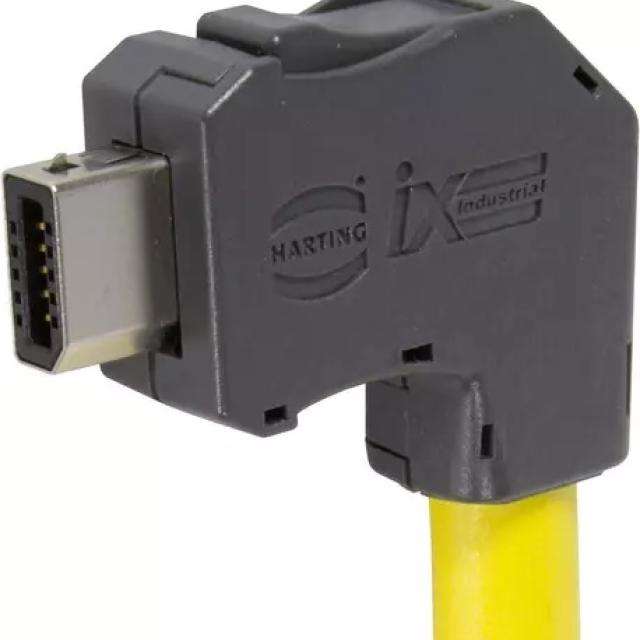
The HARTING ix Industrial connector addresses this by offering a robust, compact alternative that saves up to 70% space on the PCB while supporting Cat.6A 10 Gbit/s Ethernet with Power over Ethernet (PoE/PoE+). Compliant with IEC 61076-3-124, the ix Industrial series features five Through-Hole Reflow (THR) shield contacts that anchor the socket to the PCB, absorbing mechanical yank force, alongside dual metal locking hooks. It is available in three distinct codings: Type A for Industrial Ethernet (PROFINET, EtherNet/IP); Type B for signal/bus encoder connections replacing 9-pin D-Sub, M8, and M12; and Type C for dual-network air-gapping within a single interface.
To extend Ethernet communication down to field sensors without needing protocol converters or gateways, Single Pair Ethernet (SPE) utilises the Harting T1 Industrial connector. Compliant with IEC 63171-6, the T1 interface delivers up to 1 Gbit/s data transmission and 50 W Power over Data Line (PoDL) over a single twisted pair of copper conductors, drastically reducing cable mass and routing complexity. For external enclosure access, the har-port service interface series provides panel-mount pass-throughs for 1/10 GbE RJ45, USB 2.0/3.0, and HDMI video/audio. Installing into standard 22.5 mm circular panel cutouts with a central fastening nut, har-port units feature IP65/IP67 protective covers to allow safe external servicing without opening cabinet doors.
| Data Interface | Standard / Specification | Key Feature | Target Application |
| ix Industrial | IEC 61076-3-124 | 70% PCB space saving; Cat.6A 10 Gbps; PoE+ | Compact PLCs, drives, robotics, and dual-network air-gapping. |
| Harting T1 (SPE) | IEC 63171-6 | Single pair copper; 1 Gbps data + 50 W PoDL | Field-level sensor Ethernet without protocol gateways |
| Har-port | Standard 22.5 mm cutout | Pass-through for RJ45, USB 2.0/3.0, HDMI; IP67 | External cabinet programming and diagnostic service ports |
Read next:
- Single Pair Ethernet (SPE) T1 Industrial Connector Guide
- IP67 Rated Panel-Mount har-port Service Interfaces for Control Enclosures
Locking Mechanisms, Termination Methods, and Configuration Tools
Securing a connector assembly requires matching the locking mechanism to operational handling requirements and thermal/mechanical stress levels. Lever locking systems (available in single or double metal/plastic levers) are the primary choice for heavy industrial connectors due to their high clamping force, tool-free operation, and intuitive handling. Screw locking mechanisms (M6/M8) are reserved for extreme shock and high-vibration applications like mining and rail, ensuring threads cannot shake loose. PushPull systems provide rapid "click-and-lock" mating for data and service lines, spring latches secure compact metal housings, and bayonet locks secure circular connectors with a 90-degree twist.
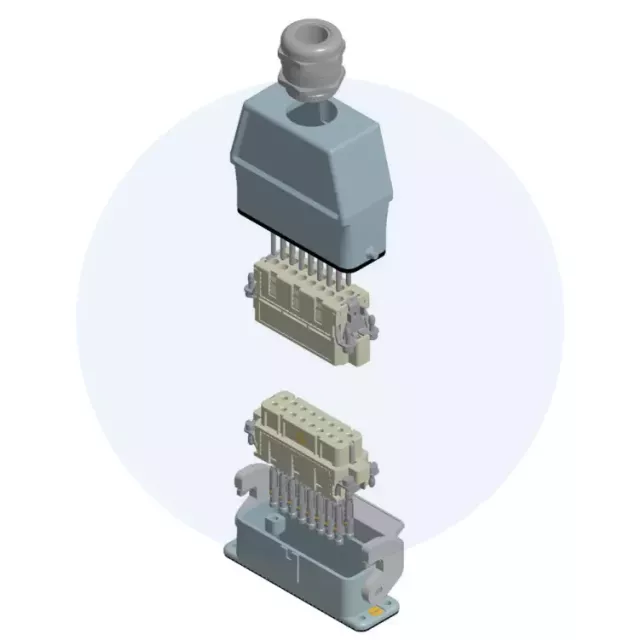
Equally critical is selecting a vibration-proof contact termination method. Standard crimp termination creates a gas-tight cold weld between conductor and contact, providing superior mechanical fatigue resistance for high-reliability applications when using dedicated crimp tools and locators. Axial screw termination utilises a conical screw that spreads wire strands outward against the contact wall, delivering near-crimp vibration resistance without specialised crimping tools. Cage-clamp (spring-cage) termination maintains constant spring pressure on conductors, automatically compensating for thermal expansion and continuous mechanical movement. To streamline selection across thousands of potential combinations, electrical designers can use the digital online Han Configurator. By inputting core parameters (contacts, voltage, current, IP rating), engineers can instantly generate itemised Bills of Materials (BOM) and download 3D CAD models for integration into mechanical CAD software.
Termination Selection Checklist
- High-Vibration Production Line -> Standard Gas-Tight Crimp (Requires Crimp Tool)
- Field Assembly / No Crimp Tool -> Axial Screw (Conical Strand Expansion)
- Thermal Cycles & Continuous Shock -> Cage-Clamp Spring Pressure
- Rapid BOM & CAD Generation -----> Harting Online Han Configurator Tool
Read Next
Because industrial operations present unique physical and electrical challenges, Harting connector configurations are tailored to specific application requirements. The table below outlines common industrial applications, their primary operational challenges, and the recommended Harting connector combination:
| Industry Application | Operational Challenges | Recommended Housing & Modular Configuration | Practical Benefits |
| Robotics & Motion Control | High movement, tight cable bending, strict weight limits. | Han-Modular / Han Domino in Han-Eco or Han B (6B–24B) . | Combines power, signal, data, and air in 1 plug; halves mass. |
| Mining & Earthmoving | Heavy dust, slurry washdowns, severe vibration (5g–30g). | Han HPR (IP68/IP69K, M6/M8 screws) + Crimp / Axial Screw. | Prevents accidental opening under shock; gas-tight seals stop dust. |
| Food & Beverage Processing | Aggressive chemical washdowns, hot water (80°C), hygiene. | Han F+B (FDA Polypropylene, IP69K). | Crevice-free body prevents bacterial traps; withstands acids/alkalis. |
| Battery Energy Storage (BESS) | High current draw (200 A), thermal stability, short-circuit risk. | Han S (UL 4128, 200 A, Red/Black coding). | Prevent mis-mating via mechanical coding; built-in BMS pins. |
| Control Panel Building | Assembly bottlenecks, tight cabinet cutouts, off-site pre-wiring. | Han-Eco (rear-mount), har-port (22.5 mm), ix Industrial. | Enables pre-harnessing off-site; saves up to 70% PCB space. |
Read next:
Frequently Asked Questions (FAQ)
Q1: How does the Han Modular Domino system differ from standard Han-Modular inserts?
A: Standard Han-Modular inserts take up a full module slot in a retaining frame. The Han Domino system splits that slot into two half-width "cubes," allowing engineers to mix two different media types (e.g., power and data) in a single slot, reducing footprint and weight by up to 50%.
Q2: What is the main benefit of rear-mounting capability in Han-Eco housings?
A: Rear-mounting allows pre-assembled cable harnesses to be snapped into the housing from inside the switch cabinet. This eliminates the need to pass cables through the panel cutout from the outside, significantly speeding up panel builds and field installation.
Q3: Why are screw-locking mechanisms used on Han HPR housings instead of standard levers?
A: Standard levers can accidentally snap open under severe mechanical shock or continuous vibration. The M6/M8 screw-locking system on Han HPR housings maintains constant clamping force, guaranteeing IP68/IP69K sealing under shock loads up to 30g.
Q4: Can IX Industrial connectors replace traditional D-Sub or M12 connectors for encoder signals?
A: Yes. The IX Industrial Type B coding is specifically designed for signal and bus applications, providing fully independent active pins that replace 9-pin D-Sub, M8, and M12 signal connectors while saving PCB space.
Q5: How does Single Pair Ethernet (SPE) simplify field-level sensor connections?
A: Traditional sensor networks require protocol converters or fieldbus gateways to communicate with Ethernet networks. SPE (Harting T1) transmits 1 Gbps Ethernet data and 50 W PoDL over a single copper pair, allowing direct IP communication from field sensors to control systems.
Technical Assistance & Custom Configuration
If you need some help getting started, or perhaps have a specific application, the ADM team can help! Send any questions via our contact page here or call the team directly on 1300 236 467.