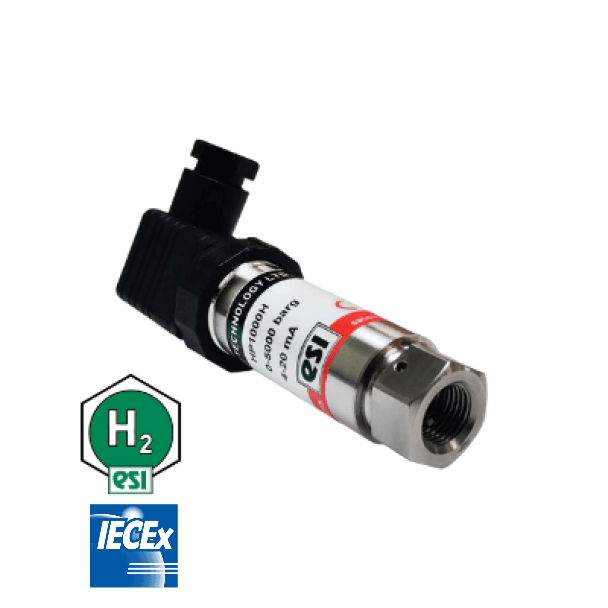
Industrial Pressure Measurement Guide: Selecting Transducers, Transmitters, and Electronic Switches
Pressure monitoring plays a key role in industrial, civil, and environmental settings. It supports many important applications. In this article, we aim to help our customers understand pressure transducers and choose the right sensing instrument for their needs.
Short on Time? Send any questions through our contact page here, or call us directly on 1300 236 467
Understanding Pressure Reference Points: Gauge, Absolute, Differential & Sealed
There are four main pressure reference types: gauge pressure, absolute pressure, differential pressure, and sealed gauge pressure. Knowing which type you need to monitor will help you choose the right pressure instrument.
Gauge Pressure vs Absolute Pressure: Key Process Differences
Gauge pressure is measured against the surrounding atmospheric pressure (101.3kPa at sea level). The sensor vent lets local barometric changes balance the diaphragm's back pressure. This type is often used in open tanks, hydraulic lines, and compressed air systems.
Absolute pressure is measured against a sealed, perfect vacuum (0 bar absolute). It is essential for barometric monitoring, vacuum distillation, altitude measurement, and closed-loop process reactors where weather changes must not affect readings.
Differential Pressure (DP) & Sealed Gauge
Differential pressure measures the difference between two separate pressure ports (P/high and P/low). It is key for flow calculations using orifice plates or venturi tubes, monitoring filter clogs (clean versus dirty side), and sensing levels in pressurised vessels.
A sealed gauge references a sealed chamber set at standard atmospheric pressure, not vented to the outside. This is useful in harsh washdown or submerged environments where moisture entering through a vent tube could damage the electronics.
Pressure Transducer vs Transmitter vs Switch: Core Differences & Architecture
The right pressure instrument can use any of these pressure reference points. The four main types are pressure transducers, pressure transmitters, pressure switches, and pressure gauges. Each type offers different options depending on how and where it will be installed.
Pressure Sensor (Sensing Element)
The pressure sensor element is effectively the diaphragm that deforms under pressure. The diaphragm can be a Wheatstone bridge, a piezoresistive silicone die, a piezoresistive ceramic diaphragm, a piezoelectric element, a capacitive cell, or a thin-film strain gauge. The pressure sensor is the foundation of all pressure instruments. or less effective across different pressure application mediums. Below is a quick table showing which applications these sensing elements can support.
Diaphragm Sensing Technologies & Media Compatibility
Sensor Element | Suited Application |
|---|---|
| Piezoresistive (Silicone) | Clean gases, general industrial hydraulics, pneumatic lines |
| Piezoresistive (Ceramic) | Wastewater, aggressive acid/chemicals, food & beverage |
| Thin-Film / Strain Gauge | Heavy mobile hydraulics, surge vessels, water hammer applications, engine testing. |
| Capacitive Cell | Cleanroom differential pressure, HVAC draft monitoring, critical process DP transmitters |
| Piezoelectric | Explosive blast testing, ballistic pressure, ultra-high-speed cavitation, water hammer diagnostics (not ideal for static pressure). |
Pressure Transducers: Signal Characteristics & Millivolt Outputs
Pressure transducers convert diaphragm movement into a corresponding voltage signal (in mV or V).
Most pressure transducers use a piezoresistive strain gauge and a Wheatstone bridge. They apply an excitation voltage to measure resistance changes. A signal conditioner or transmitter then boosts the millivolt signal, linearises it, and converts it to a standard format like 4-20mA or sometimes a higher voltage (0-10V), allowing longer cables to a control unit.
Pressure Transmitters: 4–20 mA Current Loops & Industrial Fieldbus
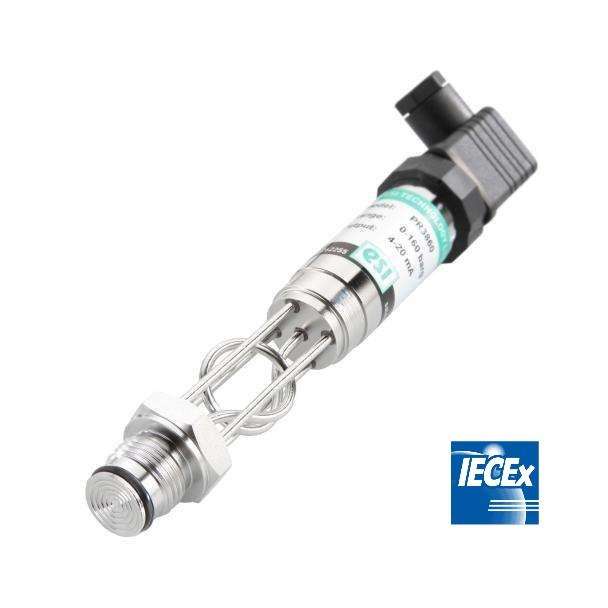
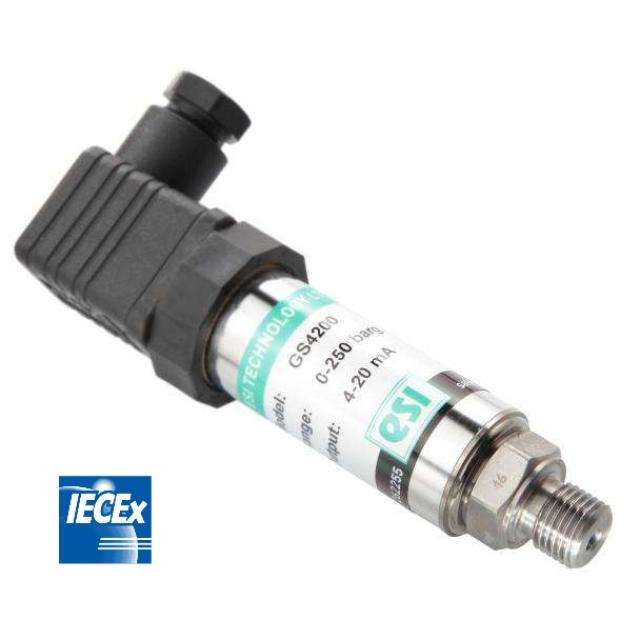
A transmitter is a transducer with added circuitry that outputs a standard industrial signal, such as 4-20mA, or a digital protocol like HART or Modbus RS-485. Because current signals are unaffected by line resistance or voltage drop, pressure transmitters are widely used in process automation, water systems, and manufacturing.
Image
Pressure Gauges: Local Indication vs Continuous Telemetry
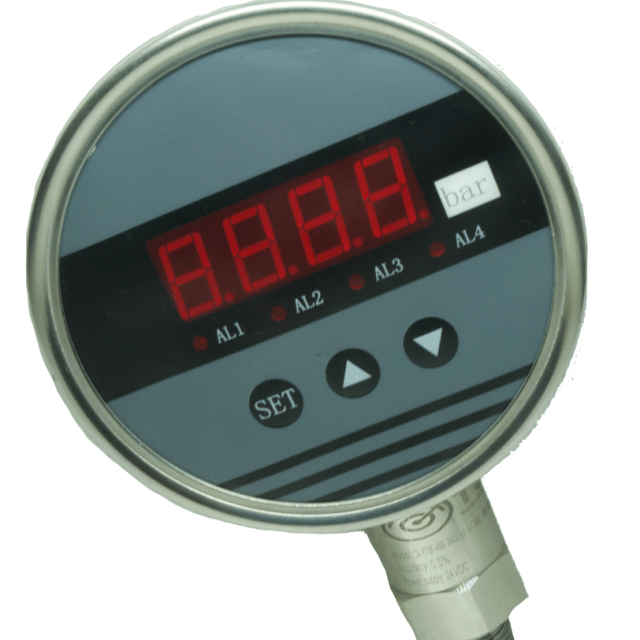
Pressure gauges are self-contained and provide local readouts for direct operator monitoring at the point of measurement, without necessarily transmitting data to a PLC or SCADA network.
Image
Pressure Switches: Mechanical Deadband vs Programmable Electronic Trip Points
Pressure switches work differently than transducers, transmitters, and gauges. While those focus on continuous monitoring, a pressure switch provides direct threshold control.
Pressure switches come in two types: mechanical and electronic. Both types open or close a circuit to start pumps or set off alarms when a set pressure is reached.
Mechanical Pressure Switch
Mechanical pressure switches use a diaphragm, piston, or bellows to press a calibrated spring and trigger a microswitch. They are tough, use only mechanical parts, need no power supply, and let you adjust the setpoint with a hex screw.
Mechanical pressure switches have many uses today; however, the technology isn’t as advanced as its electronic counterpart, which limits deadband settings and increases wear and tear over time.
Image

Electronic Pressure Switch
Using the same type of pressure sensor as transducers, transmitters, and gauges, the electronic pressure switch uses a piezoresistive or ceramic cell combined with a microcontroller. Because they are electronic, trip and reset points are programmable, with no mechanical switch contacts.
In more modern variations, electronic pressure switches can feature switching outputs and a 4-20mA I/O link analog output, taking on more characteristics of pressure transmitters.
Image

Specialised Pressure Instruments for Civil & Mechanical Applications
Pressure instruments come in a handful of variations, each designed for specific pressure-monitoring applications. These include hydrostatic level transmitters, differential pressure cells and smart/digital pressure transmitters.
Hydrostatic Level Transmitters: Submersible Probes & Flush Diaphragms
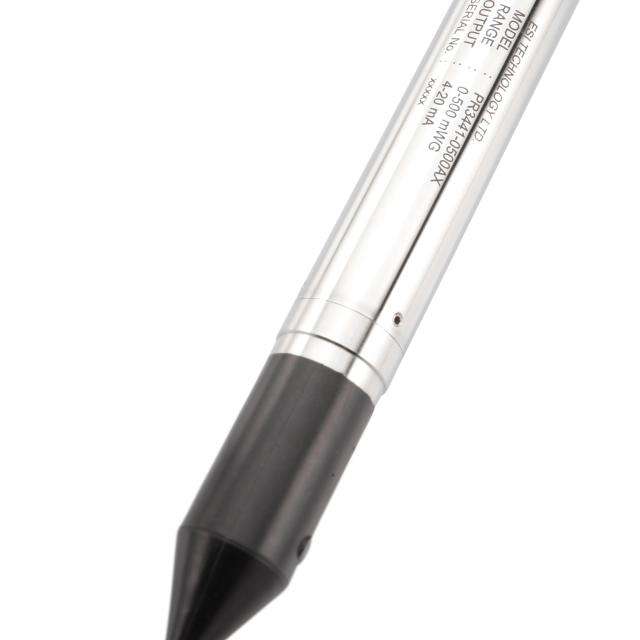
Hydrostatic level transmitters are submersible probes that measure level or pressure in a liquid-filled vessel, tank, or pipeline.
There are two main types: the classic hydrostatic transducer probe, which is a cylinder with holes at the end, and the flush-mounted pressure transmitter, which faces the liquid directly through a recessed port. The flush-mounted type helps prevent mud, debris, or other materials from building up or clogging the instrument.
Image
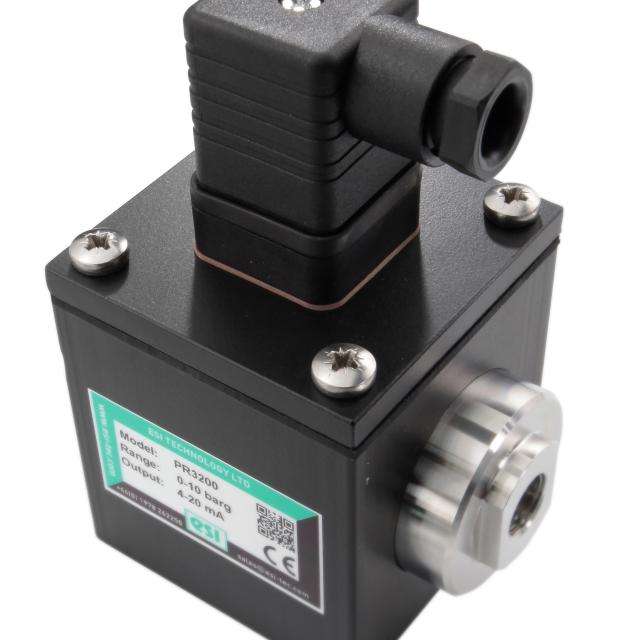
Differential Pressure Cells: Flow, Filter Clogs & Sealed Vessels
Differential pressure cells measure the pressure difference between two process taps using a single sensing diaphragm. Instead of comparing to the atmosphere or a vacuum, they only measure the difference between two points.
Differential pressure cells can be used for various applications, including;
- Filter monitoring: detecting blockages by measuring pressure drop across a filter element
- Flow rate: measuring pressure drop across an orifice plate or venturi tube.
- Pressurised Tank Level: Determines the liquid head in a sealed vessel by subtracting headspace/vapor pressure from total bottom pressure.
Image
Smart Pressure Transmitters: HART, IO-Link & Active Thermal Compensation
Combining a pressure sensor with an onboard microprocessor to calculate, compensate and communicate bidirectional data, rather than outputting a simple one-way analog current or voltage.
These pressure transmitters provide accurate, continuous readings, real-time device health checks, process temperature data, and remote configuration. They often support advanced communication protocols like HART, IO-Link, Modbus RS-485, or Profibus.
With advanced communication and onboard processing, these transmitters let users make remote adjustments and actively correct for temperature changes, reducing measurement drift.
Dynamic Data Acquisition & Digital Bus Protocols (USB & RS-485 Modbus)
Most industrial applications typically use analogue 4-20mA loops; however, as industrial process technologies advance, many pressure transmitters now support digital protocols for high-speed dynamic logging and multi-drop field networks.
USB Pressure Acquisition
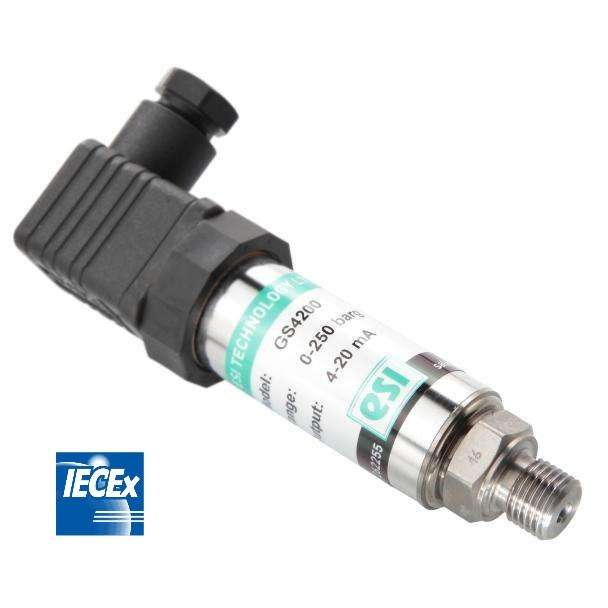
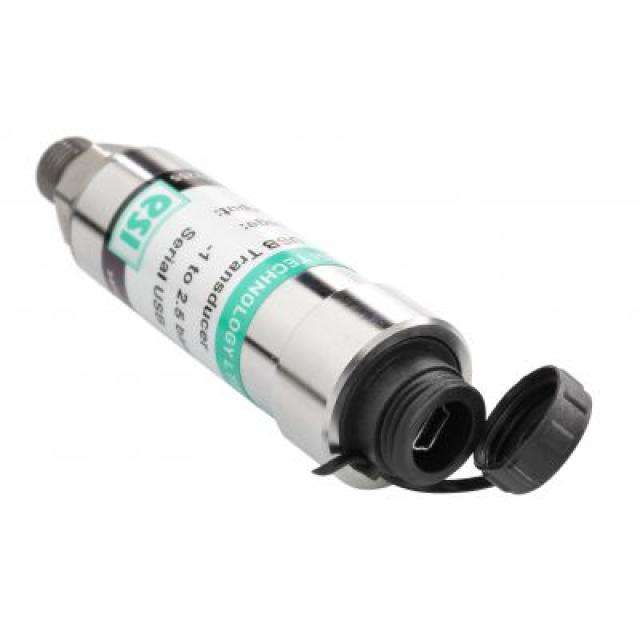
Across the ESI range of pressure transmitters, USB connectivity is becoming standard. These plug-and-play USB pressure transducers, like the GS4200-USB and dynamic GD4200-USB, reduce the need for costly external I/O data acquisition cards by converting signals directly at the sensor.
This move to USB transducers draws bus power directly from the computer port. It supports sampling rates up to 1,000 readings per second (1,200 Hz), ideal for complex applications requiring transient capture, burst testing, and automated 5-step leak verification. The ESI-USB pressure transmitter range supports up to 16 digital sensors live-streaming simultaneously from a single USB hub.
Image
RS485 Serial Communications
For digital transmission over long field distances, RS485/Modbus RTU pressure transmitters like the ESIGS4400 series or LEEG SMP131 transmit noise-free digital data over distances from 500m to 1000 m. This process can daisy-chain up to 32 transmitters across a single BUS, enabling centralised multi-port data logging while keeping sensitive monitoring PCs safe from the harsh process environment.
Learn more about RS485 Pressure Transmitters in our blog here.
Pressure Sensor Architecture & Core Technologies: Silicon-on-Sapphire vs Monosilicon
A pressure instrument's accuracy, thermal stability, and overall survivability depend on two physical layers: the sensing element's molecular structure and the wetted cell's mechanical metallurgy.
General-purpose transmitters can use either diffused semiconductors or bonded metal foil strain gauges. For more demanding process conditions (dynamic pressure spikes, corrosive media, continuous high-cycle fatigue, etc.), you need the more sophisticated crystal substrates and seamless wetted geometries.
For example, when monitoring hydrogen gas in an application, conventional stainless steels would be completely unsuitable because of the risk of hydrogen embrittlement.
Silicone on Sapphire (SOS): Removing Hysteresis, Thermal Drift & P-N Junction Leakage
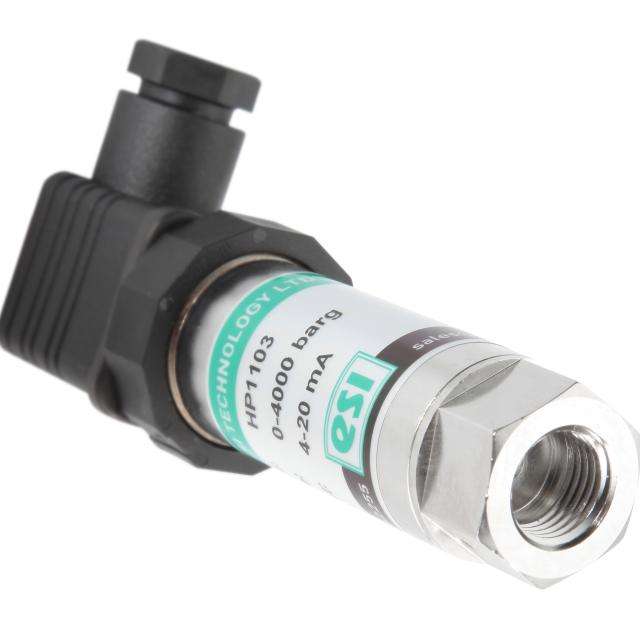
Silicone on Sapphire is the leading design in extreme-duty industrial sensing and is used across the ESI pressure transducer range (GS4200, HP1000 and GD4200-USB series).
SOS is rapidly becoming the de facto standard for quality industrial pressure measurement as it effectively mitigates the usual failure modes of conventional sensors by minimising thermal drift, junction leakage and mechanical hysteresis under cyclic load.
Learn more about ESI’s SOS technologies used in their pressure transducers in our blog.
Heteroepitaxial Crystal Growth & High-Cycle Fatigue Limits
SOS sensing elements are made via heteroepitaxy (growing an ultra-thin single-crystal silicon layer onto an engineered synthetic sapphire substrate). Sapphire is an excellent electrical insulator, so the silicon bridge doesn't require p-n junction isolation, and high-temperature electrical leakage is not a concern. It operates perfectly over a very wide temperature range with no zero shift.
Near-Zero Mechanical Hysteresis
Sapphire shows near-perfect mechanical elasticity. Under alternating dynamic stress, the crystal lattice deflects and returns to datum with virtually no molecular deformation. This removes the measurement lag between rising and falling pressure cycles, which is common with organic-bonded foil gauges.
Overpressure & Fatigue Endurance
The bond between the epitaxial silicon and the sapphire substrate is very strong and provides excellent burst pressure safety margins. In cavitation-prone applications with very fast valve actuation and/or water hammer, the SOS will survive high-pressure pulses without peeling, micro-cracking, or permanent calibration drift.
Single-Piece Monolithic Titanium: Eliminating Welds, Gaskets, and O-Ring Failure Modes
In harsh environments, mechanical joints, O-rings, and the weld's heat-affected zone are the main failure points under dynamic pulsation and chemical wear. The ESI is a monolithic titanium wetted assembly (including the pressure diaphragm and threaded port) CNC-machined from a single piece of high-grade titanium.
This design eliminates internal O-rings, elastomeric gaskets, and weld seams, which in a conventional alloy-welded transducer can cause weld fatigue cracking and media leakage.
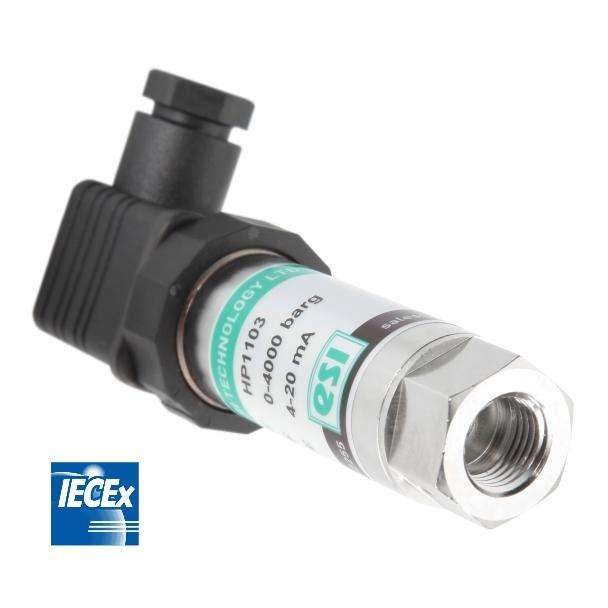
Titanium is naturally resistant to corrosive media, including salt water, chlorination byproducts and aggressive industrial fluids. The titanium structural integrity of the ESI assembly reliably measures hydraulic and downhole pressure up to 5,000 bar.
Image
Monosilicon - High Overload Resilience & Long-Term Calibration Stability
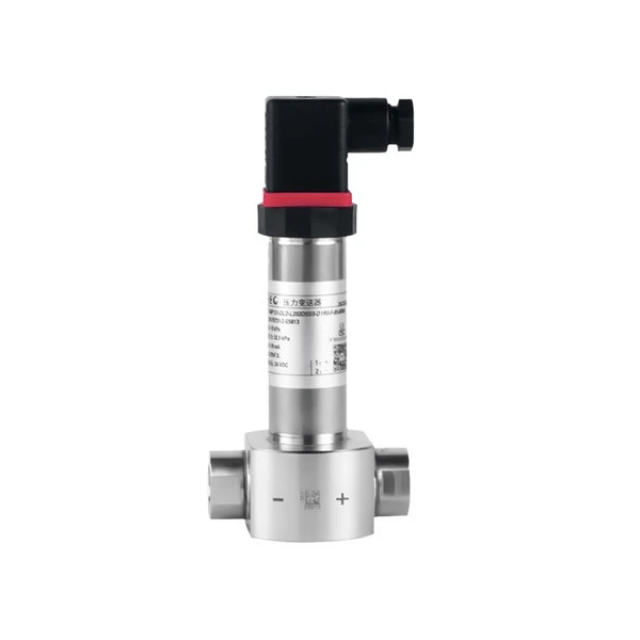
The LEEG range of pressure transmitters uses monosilicon sensor technology and delivers high dynamic precision for continuous process monitoring and differential pressure applications.
Monosilicon elements use the same Wheatstone bridge concept but improve it through higher-quality single-crystal silicon. The crystal's higher purity gives monosilicon elements greater tensile resilience to overload pressure, surges, and sudden mechanical shock than the polycrystalline films used in other pressure transmitter ranges. This enables high update rates and excellent long-term calibration stability.
Image
Wetted Housing & Material Selection (Brass, Plated Steel, 316L Stainless & Titanium)
Selecting the right body and wetted materials ensures service life and matches the budget to process severity.
| Material Specification | Typical Instrumentation | Pressure Limits | Chemical & Mechanical Suitability | Typical Industrial Environments |
Machined Brass | TSA-APA Series Switches | Low pressure (0.3 to 10 bar) | Cost-effective; non-rusting in neutral water and dry gas streams | Factory air, pneumatic automation, water booster pumping |
Zinc-Nickel-Plated Steel | TSA-BPA Series Switches | High pressure (8.6 to 414 bar) | Engineered for mechanical impact, exterior road spray, and hydraulic spikes | Mining haul trucks, mobile cranes, hydraulic power units (HPUs) |
316L Stainless Steel | TSA-1200PT, LEEG SMP131, ESI PR3850 | Vacuum to 1,000+ bar | General corrosion resistance; withstands CIP/SIP chemicals, moisture, and mild acids | Food & beverage, wastewater valve pits, agricultural irrigation, general processing |
Titanium Alloys | ESI GS4200, HP1000, GS4200H | 100 mbar to 5,000 bar | Complete immunity to seawater, saltwater aerosols, and certified resistance to hydrogen embrittlement | Offshore marine, exhaust gas scrubbers, downhole drilling, clean hydrogen distribution |
Process Connection Diaphragm Geometry: Recessed Cavity vs Flush Diaphragm
Different pressure transmitters have different diaphragm shapes, and the diaphragm shape can affect how the fluid and media interact with the pressure sensor. ADM offers two diaphragm types: the standard recessed cavity diaphragm and the flush diaphragm.
Recessed Cavity Diaphragm - Clean Media Standard & Sub-Zero Cavitation Risks
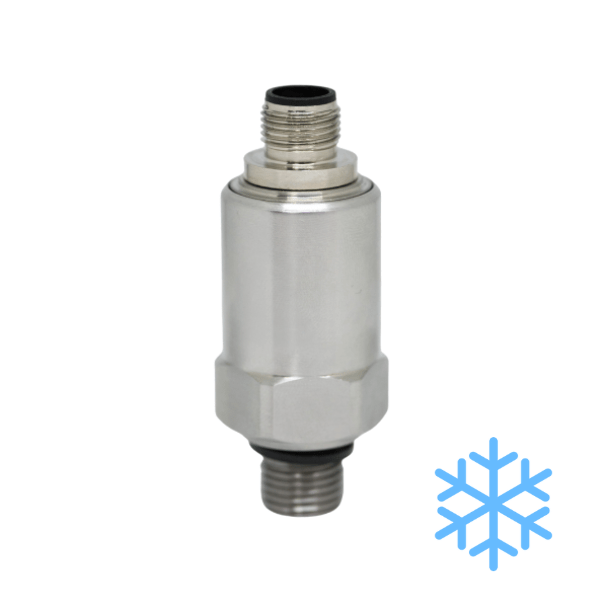
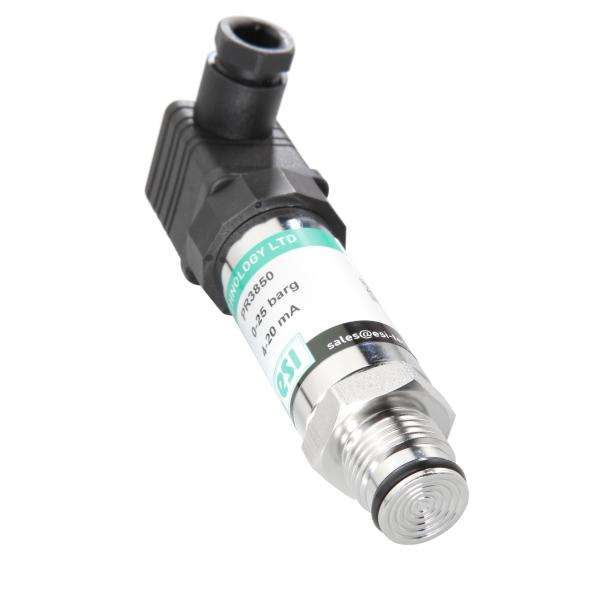
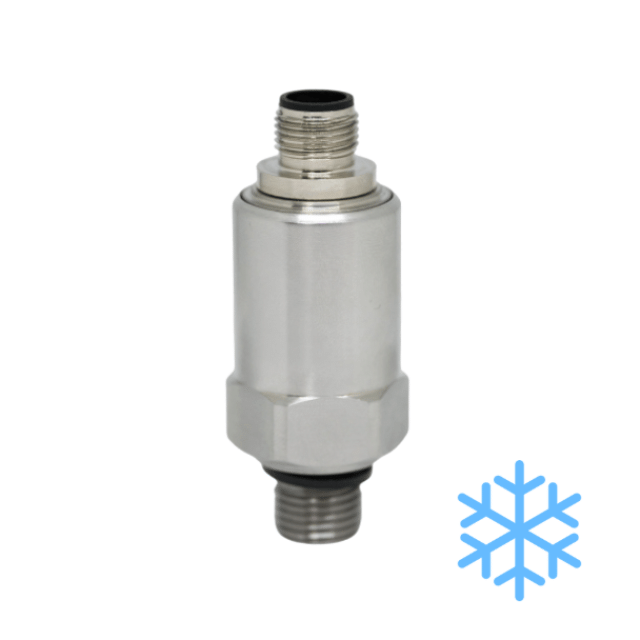
This is the standard pressure transmitter type in our TSA and ESI ranges. It's a diaphragm type that is recessed behind a very narrow pressure port. You'd typically use it in clean-water and clean-media applications. It can become heavily impacted in wastewater or other applications where debris or build-up tends to occur, as it can plug the pressure port. In sub-zero environments, it can also ice up through the pressure port and the ice will expand and crack the diaphragm.
Image
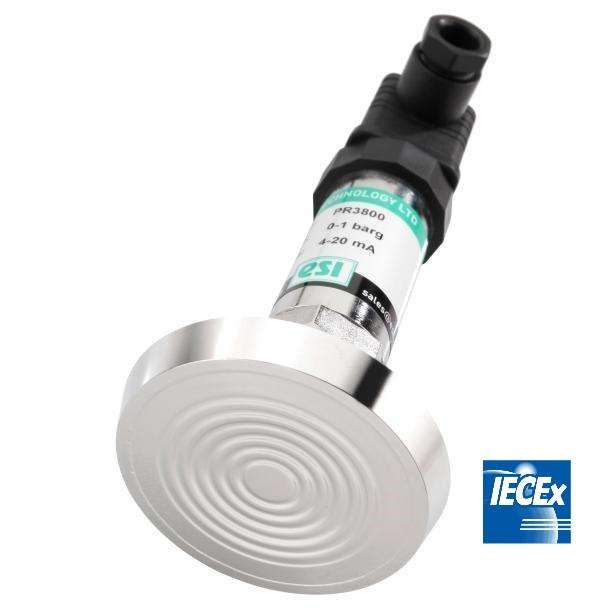
Flush Diaphragms - Viscous Media, Particulate Slurries & Sanitary Conditions
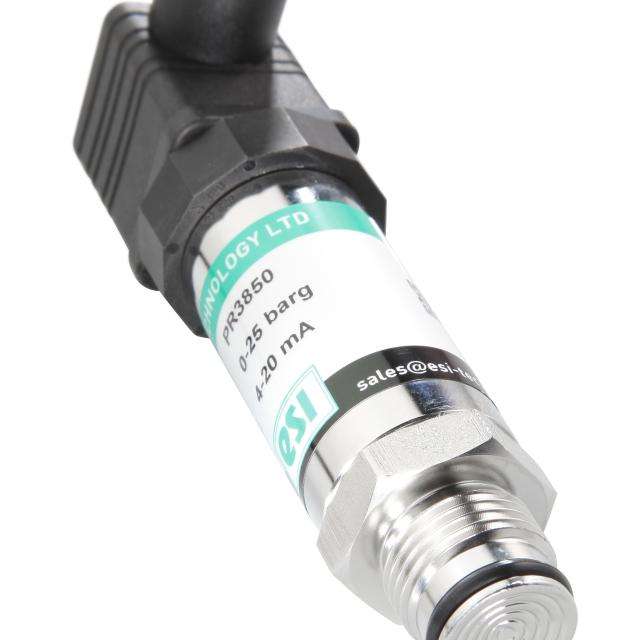
This is a large, flat, wide process diaphragm that mounts directly flush to the inside pipe wall. Flush-mounted pressure transmitters are ideal for food & beverage and wastewater applications as the wider, flatter face reduces the potential for media build-up and catch during operation.
Learn more about flush-mounted pressure transmitters in this blog.
Image
Need Support? Contact Us Today!
Finding the right pressure instrument for the right application can be challenging. If you're searching for a pressure instrument, let us help you find the right one. ADM keeps pressure transmitters and transducers in stock across our Melbourne, Brisbane and Perth warehouses. Whether you have the specs or are just starting your search, the ADM team is here to help! Send any questions through our contact page here, or call us directly on 1300 236 467
Image